Your cart is currently empty!
Category: Words
This is why we can’t have nice things…
There was a guy behind my familys car who just kept honking his horn a lot, and when we looked back at him, he gave us a weird smile…
Sometimes I Wonder Why Humans Exist
Sometimes I wonder why humans exist.
With all this power curled into our fists.
All we need is just to persist.
To step out of our comfort zone and into the mist.
We Almost died…IN THE GARAGE
So, my family and I recently went to this Airbnb to have a 2-night stay. There were 2 families with us, 1 with no kids and another with 2 kids. We already knew those kids before. One of them was the most annoying female specimen (if we can even call her that). She SCREAMS when she doesn’t get what she wants, like “naa NAAA!!”. Then there is the other kid (he’s more important to the story). His name is Audhrit. So we were playing this game about Eggmen (yes, Eggmen), and Sanic (yes, Sanic). We had a lot of fun chasing after a ball we claimed to be an egg. The Sanic team had to protect the egg from Eggmen, who screamed egg-themed puns like “EGGTASTIC!” when he didn’t get what he wanted. The game didn’t make sense because if you don’t want Eggmen to get your egg, WHY ARE YOU BRINGING IT TO HIM? SO the next game we played was called Weird Strict Dad Gamshow, led by Aurhaan. We went downstairs to the basement to play. (Okay, for more context, there’s a basement below the Airbnb with a HUGE tennis table in the garage. We also lost all the balls because some fell in the trash can, and others were too dirty to play with.) So we were all down in the basement, and we made our way to the garage. Aurhaan started telling us the rules of the games when he realized he had forgotten something upstairs. He tried to open the door, but it was locked. He gave a silent nudge to me to try, but it didn’t work for me either. Audhrit tried too, to no avail.
“WHO LOCKED THE DOOR!?” I asked everyone in the garage. Audhrit pointed to Aurhaan, and Aurhaan pointed to Audhrit. “How do we get out of here?” I asked everyone again. “WE SCREEEAAAM!” Aurhaan replied. We scream in the most unsynced, incoherent ways ever, basically, not English. Then we noticed it…
“Its a doggy door!” Maybe Audhrit can squeeze through it?” Audhrit started pushing his body through. It was kind of satisfying to see how he fit, though, so perfectly. He went out and alerted the other parents, then he came inside and opened the garage door. WE WERE FREE!
That night, we had toasted marshmallows and chicken with roti. I stared at the sky and saw a shooting star and made a wish.
Is It Ever Wrong To Do The Right Thing For The Wrong Reasons? Explained By Doves
A Philosophical Fable
This fable argues that while wrong motives do not always corrupt an outcome, they corrupt the person, and a society of people acting rightly for wrong reasons is a society built on sand. I have chosen the form of a philosophical fable deliberately: not to avoid the argument, but to carry it. The characters are doves while the question is serious.
The sky over Doveton was a pale grey that made everything feel serious. It was the kind of sky that seemed to know something, something that the birds did not.
Bryan had always been a quiet dove. He had brown-tipped wings, a slightly guilty blink he was born with and couldn’t help, and a habit of mumbling when he was nervous, which, lately, was always.
Herfren, his best friend, was the opposite. He wore tiny glasses he didn’t actually need, carried a black notebook everywhere, and had opinions about everything, including things that hadn’t happened yet. He was, by every available measurement, a big nerd, and deeply proud of it.
Maya was the third. Sharp, funny, and the kind of dove who could walk into any room and immediately understand what was wrong with it. She called Bryan “B” and Herfren “the Professor,” which Herfren secretly loved more than anything.
The three of them had been inseparable since the egg.
It started on a Tuesday.
A dove had been found on the yellow grass outside a large house at the edge of Doveton. Still. Silent. Gone. Witnesses had reported seeing Bryan in the area that evening. He had been sleepwalking, he said. He had done something in the dark he couldn’t explain, and when he woke up, he was alone and the grass was cold.
The charge was the worst kind, so heavy, so frowned upon that even saying the word out loud made the courtroom go quiet. Bryan had allegedly taken the life of a fellow dove.
He sat in the wooden accused box, wings folded tight, beak trembling. “I didn’t know,” he kept saying. “I didn’t even know anything happened.”
Nobody was sure whether that made it better or worse.
Herfren arrived carrying some notebooks, a borrowed copy of Aristotle’s Nicomachean Ethics, and chamomile tea. He had stayed up all night preparing.
Maya had not come. “She has a cold,” Bryan whispered. “She texted me last night.”
The court filled quickly. Two sides arranged themselves, resembling mirror images of disagreement. The Defence argued Bryan had not intended harm. The Prosecution argued the dove was still dead.
The Prosecution’s lead speaker, a sharp-beaked dove named Cornelius, walked slowly before the benches. “We are not here to discuss feelings or intentions. John Stuart Mill argued that the morality of an action is determined entirely by its consequences, by the greatest good for the greatest number. A dove is dead. That outcome is real, measurable, and cannot be undone by whatever the accused claims to have felt or not felt in the dark. A society that allows its members to escape consequence simply by claiming ignorance is not a society.”
When Herfren stood, he spoke like someone who had already considered every objection and found it wanting.
“My colleague is not entirely wrong,” he began. “The real question,” he muttered, opening his notebook, “is whether it’s ever wrong to do the right thing for the wrong reasons. “A starving child doesn’t care whether the dove giving them bread is a saint or a selfish one. The bread tastes the same.” He paused. “But if we judge every action only by outcome, we build a world where intention is meaningless. And Immanuel Kant argued that the moral value of an action is determined by the reason it was taken. Bryan did not intend harm. He did not know. Remove intention from morality, and we are no longer talking about justice; we are talking about punishment for punishment’s sake.”
He glanced at his notes. “Aristotle reminded us that character is built through repeated action, we become what we consistently do, and why we do it. Nothing in Bryan’s history points to malice. What we have here is not a killer. What we have is a tragedy.”
It was during the recess that Justice Plume, the oldest dove in Doveton, presided from the high bench. The clerk passed her a folded note. The old judge read it slowly.
“I have received,” she said, “the formal identification of the dove whose life was lost. The deceased’s name was Maya.”
Bryan did not move for a long moment. “That’s a common name,” he said quietly. “Maya has a cold. It’s a common name.”
“Bryan,” Herfren said.
“It’s not her.”
Herfren put his wing on Bryan’s arm and said nothing. This was the part no notebook covered.
Bryan stood. “I need to call her.”
Outside, Bryan pulled out his banana-shaped phone, yellow, battered, stickered with a small drawing Maya had done of all three of them, and called her number.
It rang. No answer. He called again. Nothing. A third time. Silence.
“We need to go to her house,” Bryan said.
Herfren picked up his notebooks. “Okay,” he said. “We go.”
Maya’s house sat where the streets gave way to open fields. She had a garden, and in the garden grew yellow grass, long and soft, the colour of old sunlight.
Herfren saw it first. He stopped walking and put his wing out, but Bryan had already seen.
She was lying on the yellow grass. Still. Her wings folded at her sides the way they always were when she slept, except she was not sleeping.
Bryan walked forward slowly and knelt beside her. His beak trembled. Then his whole body trembled. And neither of them said anything, because there was nothing in any book, philosophical or otherwise, built for this moment. The moment you realise the person you thought was simply sick is the person the world already lost. And that you were the one who lost her, even though you didn’t know, even though you didn’t mean to, and all of that being true changes nothing about the weight of it.
Herfren sat down in the yellow grass beside Bryan.
He did not open his notebook. He sat there because Bryan was there, and because it was the only right thing available; no theory had told him to do it. He did it simply because it was right.
And maybe, he thought quietly, that was the answer.
Is it ever wrong to do the right thing for the wrong reasons?
Yes, but the answer requires more than one philosopher to explain properly. Mill would say no: outcomes are what matter, and a good result is a good result regardless of motive. In emergencies, he is difficult to argue with. A drowning bird saved by a selfish dove is still saved. But Kant would disagree entirely. For Kant, an action only has genuine moral worth if it is done for the right reason. A world of people doing right things only when watched, or given a motive, is not a moral world. It is a performance. And Aristotle adds the deepest warning of all: we become what we repeatedly do. If Bryan had acted with cruelty as a habit, if selfishness had been his consistent motive across a thousand small choices, he would have been building himself into something worse. Character is not what you do once. It is what you do always, and why. The right answer is not fully Kant, not fully Mill. In emergencies, outcomes may matter most. In ordinary life, motives shape the kind of person you become. And in the long run, a society that acts rightly only for wrong reasons is a fragile one — good behaviour lasting only as long as the incentive does
Bryan had done something terrible, and he had not meant to, and the not-meaning-to was real and provable. But Maya was still gone. Intention and outcome matter. And neither, alone, is the whole story. The right answer lives somewhere harder than both.
Bryan sat in the yellow grass until the stars came out. When he finally said, “I didn’t know. I really didn’t know,” Herfren said, “I know.”
“Does that matter?”
Herfren was quiet for a long time. “Yes,” he said. “It matters. It doesn’t fix anything. But it matters.”
Maya’s banana-shaped phone lay in the grass beside her, screen dark, the last missed calls waiting in it like undelivered letters.
🕊️
The Argument of This Fable:
This fable is a philosophical argument in narrative form. Bryan represents the problem of accidental harm, a genuinely terrible outcome, caused without intent or knowledge. His case forces the question of whether morality lives in what we do or in why we do it. Cornelius the prosecutor represents the Utilitarian position: Mill’s argument that consequences are the only meaningful measure of moral worth. His case is powerful precisely because the outcome is undeniable. Herfren represents the counterargument: Kant’s insistence that intention is what gives an action moral value, and Aristotle’s warning that character is built through repeated choices and their motives. The court case cannot reach a clean verdict because the question itself cannot reach a clean verdict. That is the point. The answer to “Is it ever wrong to do the right thing for the wrong reasons?” is yes, but not always immediately, not always visibly, but corrosively, over time, in the character of the person and the health of the society. Bryan did not mean to cause harm. But the world Cornelius would build, one that ignores intention entirely, is as dangerous as the world Herfren fears: one so obsessed with motive that it forgets the dove on the yellow grass is still gone. The truth, as Herfren sits in the grass beside his friend, is that neither pure outcome nor pure intention is enough. Morality needs both, and the wisdom to know which matters more in any given moment.
Is it ever wrong to do the right thing for the wrong reasons? (v2)
Yes, but only in an important sense. Doing the right thing for the wrong reasons is often not wrong in terms of its immediate outcome, yet it can still be morally defective because it lacks moral worth, weakens character, and produces a fragile society that depends on rewards, fear, or surveillance.
In an important emergency, motive may matter less than the outcome. But as time passes, motives shape habits, habits shape trust, and trust shapes institutions. Therefore, motive matters even when the outcome is good.
According to Immanuel Kant, intent is what makes an action moral. The ethical value of an act is judged by the reason why it was done rather than the actual value of the act.
We must also define what “right thing” and “wrong reasons” mean.
Doing the “right thing” is a morally right action, not merely a legal or socially popular one.
“Wrong reasons” could be defined as a selfish or wrong motive to complete an action.
While a Utilitarian framework would argue that their action is morally right (even with a valuable prize gained after it), and morality is better than immorality, regardless of their selfish heart. Basically, they argue that what you do matters more than why you do it. They primarily judge actions by consequences, not by moral factors. As an example, a person tries to poison a village’s well, but the poison actually turns out to be a medicine that cures everyone.
Is the argument made by Utilitarians necessarily wrong?
The argument “moral is better than non-moral” makes sense and is not wrong, but doing a moral action for a selfish reason or motive isn’t very ethically sound.
Another argument a Utilitarian would say is: “A starving child doesn’t care if the person giving them bread is a saint or a selfish billionaire. The bread tastes the same.”
This objection is powerful because the beneficiary receives the same benefit regardless of motive. But this would replicate a society where people only do the right things for the wrong reasons. This reliance on rewards is something I would label using the title “moral fragility”. This is a very fragile, unstable society. This is a world built on wrong reasons, a world where good deeds stop coming in. A society that relies only on surveillance, motive, reward, and bribery is morally unstable. Good behaviour continues only while the reward or threat remains.
The right answer would be neither fully Kant nor fully utilitarianism. In emergencies, consequences may take hold of our judgment. In ordinary life, motives shape the kind of person we become. In political life, motives shape the kind of society we can sustain and keep.
Does doing the right thing for a selfish reason damage the person doing it?
Aristotle argued that we become what we repeatedly do. If we do good things for bad reasons, we aren’t actually becoming “good” people. If someone only helps people to get famous, they are training their brain to see other people as tools rather than as human beings. Even if they help 1,000 people, they become more selfish in the process.
Earlier, we defined “right thing” as being defined by following the law, but this isn’t always true. Not all laws are morally good, so if a person follows a bad law in an attempt to be a good person and citizen, would that still be defined as the “right thing” or not? For example, if a person in 1940s Europe followed a law to report their neighbors, they were “following the law” but doing something evil. If this is not defined or labeled as the “right thing”, that means that not following the law would be the right thing. If they don’t follow the law, they will be punished, so they have to follow that law whether they like it or not. So, what would this be defined as? We know it can’t be the “right thing”; the phrase “right thing” cannot mean “legal thing.” A moral discussion needs an independent definition and standard of rightness.
Selfish reasons aren’t always wrong, though. A doctor who treats a patient perfectly because they are obsessed with having a 100% success rate (a selfish reason) will be more helpful to the patient than a doctor who truly cares but is so emotional and nervous about the patient that they make a mistake. In this situation, you would probably want the selfish doctor because of a better and more accurate result, but you would probably like to invite to a party than the selfish one. An emotional outlook is better in social areas, and a selfish outlook is better in a business and professional perspective. Why do we have different standards for different parts of our lives? In market life, self-interest often produces cooperation. But a society that works only by transactions may still lack the trust needed when no contract is present, because it would benefit both sides: you get what you want, and they get what they want. Society uses a “Social Contract” which says that we don’t need to love each other to help each other, as long as our selfish interests align with the common good.
We’ve already talked about selfish versus moral reasons. There is also a third type of reason: Accidental or Ignorant reasons. As an example, someone saves a rare bird, simply because they mistook it for a common bird they wanted to eat, but they missed. So, what is the difference between malice, selfishness, and accident? Selfish motive would be defined as intending your own gain but may still help others, malicious motive would be defined as intending harm, and accidental good would be defined as not having a good intention, a good result would happen by chance.
If you intended to do wrong and failed, that is a failed immoral act. There is also benevolence, which would mean to do the right, moral thing. Which of these would benefit society? Doing the right moral thing would benefit society the most, but this is not always the case. A selfish act could benefit society, too, like the doctor example. An accidental good act could also benefit society; if someone is trying to do an immoral action, an accident could prevent that. Doing bad on purpose would have a low chance of benefiting society, unless it spirals into an accident.
While a baker’s selfishness feeds the village and a doctor’s obsession saves the patient, a world where we only do right for wrong reasons, or when watched, is a world built on fragile grains of sand. It lacks the moral resolve and the habit of excellence. Ultimately, it is wrong because it trades our long-term character for short-term gain.
So yes, it can be wrong in an important sense, even when the outcome is right, wrong motives can erode the character and trust on which a good society depends.
Bibliography:
Kant, Groundwork of the Metaphysics of Morals
Mill, Utilitarianism
Aristotle, Nicomachean Ethics (Book II for habit/virtue)
Is it ever wrong to do the right thing for the wrong reasons? (v1)
Yes, even if the result is good, it matters.
According to Immanuel Kant, intent is what makes an action moral. The ethical value of an act is judged by the reason why it was done rather than the actual value of the act.
We must also define what “right thing” and “wrong reasons” mean.
Doing the “right thing” could be defined as something that doesn’t anger or sadden the people around you; it could also be defined as something that follows the law.
“Wrong reasons” could be defined as a selfish or wrong motive to complete an action.
While a Utilitarian framework would argue that their action is sacred (even with a valuable prize gained after it), and sacred is better than non-sacred, regardless of their selfish heart. Basically, they argue that what you do matters more than why you do it. As an example, a person tries to poison a village’s well, but the poison actually turns out to be a medicine that cures everyone.
Is the argument made by Utilitarians necessarily wrong?
The argument “sacred is better than non-sacred” makes sense and is not wrong, but doing a sacred action for a selfish reason or motive isn’t very ethically sound.
Another argument a Utilitarian would say is: “A starving child doesn’t care if the person giving them bread is a saint or a selfish billionaire. The bread tastes the same.”
This makes sense. This reliance on rewards is called Moral Fragility by philosophers. A society where people only do the right things for the wrong reasons. This is a very fragile, unstable society. This is a world built on wrong reasons, a world where good deeds stop coming in. A society without virtue is inefficient because, if everyone is good only when watched, you will need police watching every corner, which would be a wrong, unsafe world.
Does doing the right thing for a selfish reason damage the person doing it?
Aristotle argued that we become what we repeatedly do. If we do good things for bad reasons, we aren’t actually becoming “good” people. If someone only helps people to get famous, they are training their brain to see other people as tools rather than as human beings. Even if they help 1,000 people, they become more selfish in the process.
Earlier, we defined “right thing” as being defined by following the law, but this isn’t always true. Not all laws are sacred or good, so if a person follows a bad law in an attempt to be a good person and citizen, would that still be defined as the “right thing” or not? For example, if a person in 1940s Europe followed a law to report their neighbors, they were “following the law” but doing something evil. If this is not defined or labeled as the “right thing”, that means that not following the law would be the right thing. If they don’t follow the law, they will be punished, so they have to follow that law whether they like it or not. Why did people follow those laws? Some did it for “wrong reasons” (fear of punishment), but others did it because they thought the definition of being a good citizen meant following every law. So, what would this be defined as? We know it can’t be the “right thing”, so the only correct way to define it is the opposite. A healthy society needs people with virtue, not just people who follow rules because they are afraid of being caught.
Selfish reasons aren’t always wrong, though, a doctor who treats a patient perfectly because they are obsessed with having a 100% success rate (a selfish reason) will be more helpful to the patient than a doctor who truly cares but is so emotional and nervous about the patient that they make a mistake. In this situation, you would probably want the selfish doctor because of a better and more accurate result, but you would probably like to invite to a party than the selfish one. An emotional outlook is better in social areas, and a selfish outlook is better in a business and professional perspective. Why do we have different standards for different parts of our lives? In a Market Economy, “wrong reasons ” are, for example, a baker making good bread just to get your money; these are actually what make the world work, because it would benefit both sides: you get what you want, and they get what they want. Society uses a “Social Contract” which says that we don’t need to love each other to help each other, as long as our selfish interests align with the common good.
We’ve already talked about selfish versus sacred reasons. There is also a third type of reason: Accidental or Ignorant reasons. As an example, someone saves a rare bird, simply because they mistook it for a common bird they wanted to eat, but they missed. So, what is the difference between malice, selfishness, and accident? Malice would be doing wrong on purpose, which is the same as selfishness from an outside perspective (because it somewhat also resembles doing wrong intentionally), but could also be right for yourself. If you intended to do wrong and failed, that is a failed non-sacred act.
While a baker’s selfishness feeds the village and a doctor’s obsession saves the patient, a world where we only do right for wrong reasons, or when watched, is a world built on fragile grains of sand. It lacks the moral resolve and the habit of excellence. Ultimately, it is wrong because it trades our long-term character for short-term gain.
Bibliography:
Will Durant, 1926, The Story of Philosophy: The Lives and Opinions of the World’s Greatest Philosophers – ”We are what we repeatedly do. Excellence, therefore, is not an act, but a habit.”
Immanuel Kant, 1785, Groundwork of the Metaphysics of Morals- “Virtue is strength born not of desire, but of moral resolve.”
John Stuart Mill, 1873, John Stuart Mill’s Autobiography- “Those only are happy (I thought) who have their minds fixed on some object other than their own happiness; on the happiness of others, on the improvement of mankind, even on some art or pursuit, followed not as a means, but as itself an ideal end. Aiming thus at something else, they find happiness by the way.”
Daquavis
I made a little duck guy called Daquavis for one of my stories but..
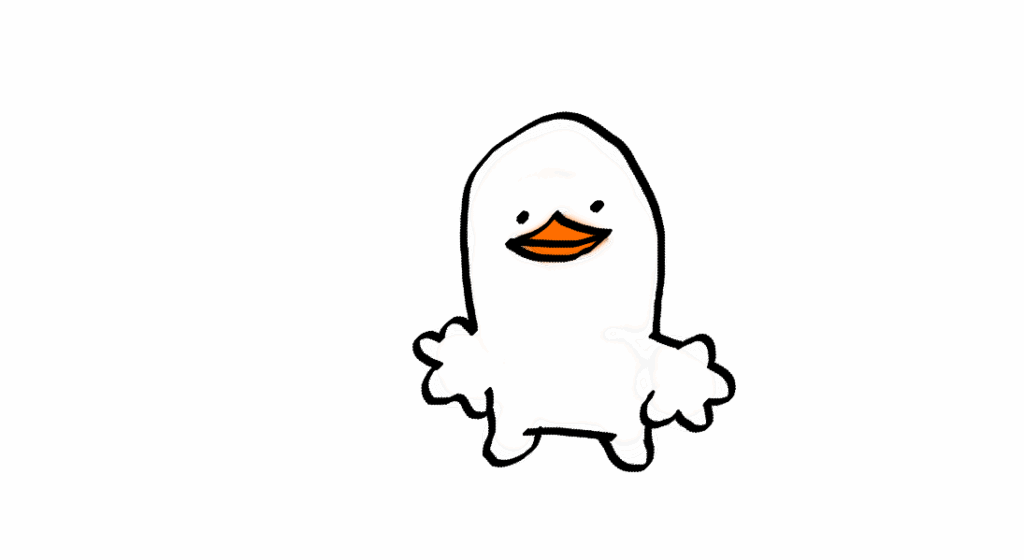
THERE IS A BIG YOUTUBER CALLED DAQUAVIS TOO,
and worse… HE ISN’T A DUCK.
💀

Citezenship in the best country explained by ducks
Your citizenship at birth was chosen for you. Which citizenship would you have chosen?
Ok, so first we have to define citizenship, the Merriam-Webster defines citizenship as the ‘status of being a citizen,’ but philosophically, it represents the intersection of individual liberty and state protection.
So now I have to decide what country I am from. This would be hard enough by itself so let’s explain it with ducks!
Why ducks? Well, this is already an interesting enough concept, so why not make it even more interesting by adding a pinch of Anas platyrhynchos into this!
So to better understand the logic of citizenship, let us utilize a thought experiment involving a rational observer-Daquavis.
Daquavis was born on a plane, in the middle of the ocean, so no one knew where he lived.
His parents bring him to the duck king to decide where he would be from.
Now logically, the duck would generally be considered a citizen of the country where the aircraft is registered, but we are talking about ducks, so logic is out of the question here.
The duck king said “QUACK QUACK QUACK!” which translated to english is “LET HIM DECIDE!”.
This was probably quoted by the duck king because John Locke believed that government is a “Social Contract.
So the decision was made, Daquavis, the nerd duck, would decide his citizenship.
The duck started thinking, luckily he knew english so we could tune into his thoughts.
Daquavises thoughts: I don’t know what country I am in right now, so I must use the knowledge that I have.
He knew that Japan was number 2 in the rankings for best country with its GDP Per Capita of PPP $50,207 and its exceptional safety, high quality of life, and efficient public infrastructure.
But that was in second, he needed the first place one.
The king sat there staring at him,
“QUACK QUACK QUACK, QUACK?” which translates to “What’s your answer, Huh?” in english.
“Well, based on the ¹HDI and economic stability metrics, Switzerland emerges as the superior choice.”
“QUACK?” the duck king shouted out, which means “WHY?” in english.
This is what he said to the king duck, “Switzerland is considered an optimal place to live due to its high quality of life, driven by high salaries, low unemployment, strong economy, political stability, and excellent public services like world-class healthcare, education, and public transport. Residents benefit from stunning natural beauty, low crime rates, a strong work-life balance, and a central location in Europe, fostering a safe, clean, and prosperous environment with ample opportunities for recreation and professional growth.”
Nerdiness is really instrumental in these types of situations.
“QUACK QUACK QUACK!” The duck king said, translating to “I NEED MORE REASONING!”
“Well, ¹GDP is considered a crucial metric for living in Switzerland because it directly reflects the nation’s immense economic strength, resulting in one of the world’s highest ¹GDP per capita levels. This translates into exceptionally high standards of living, robust public services, low unemployment, and significant stability, which are key to maintaining the country’s high quality of life.”
He took a breath.
“And also, I would choose Switzerland, although it has high prices, becausehe high costs are often viewed by travelers as a direct reflection of unparalleled quality, safety, and efficiency. While expensive, many find the investment “worth it” due to several unique factors.”
“QUACK.” The duck king shouted out loud, translating to, “Ok, fine smart individual, your decision shall be considered.”
So it was decided, he was now declared “Daquavis The Switzerland Duck”.
Daquavis’s choice reminds us that while birth is an accident of geography, citizenship is a deliberate commitment to a set of values.
¹World Bank Data, 2025.
Snow Day (again)
Ok, so I didn’t really get to go outside to play in the snow this time, because it snowed a lot and it wouldn’t stop snowing and when it finally stopped snowing, all the snow turned into ice :(. So I guess this technically not a snow day.
Thank you,
Aurique
Too Many Bots
THIS WEBSITE HAS SO MANY BOTS
I noticed that I have like 40-70 comments per post, AND ALL OF THEM ARE BOTS
They are all ranting about this gambling website thing, and OH MY GOD,
I DONT WANT TO GAMBLE, IM TOO YOUNG TO GAMBLE.
So, if you are a bot GET OUT OF MY WEBSITE, I DONT WANT YOUR PRODUCT.
Thank you,
Aurique